Paraxial Fluids of Light

We investigate paraxial fluids of light in nonlinear media, particularly using photorefractive crystals, as a versatile platform for analogue quantum simulations. Our research explores phenomena such as superfluidity, turbulence, and topological effects through tailored optical configurations and advanced wavefront shaping. By implementing a digital feedback loop, we are developing the next generation of paraxial fluids of light—extending their effective propagation and enabling the study of richer, time-evolving quantum-like dynamics.

Research Topics

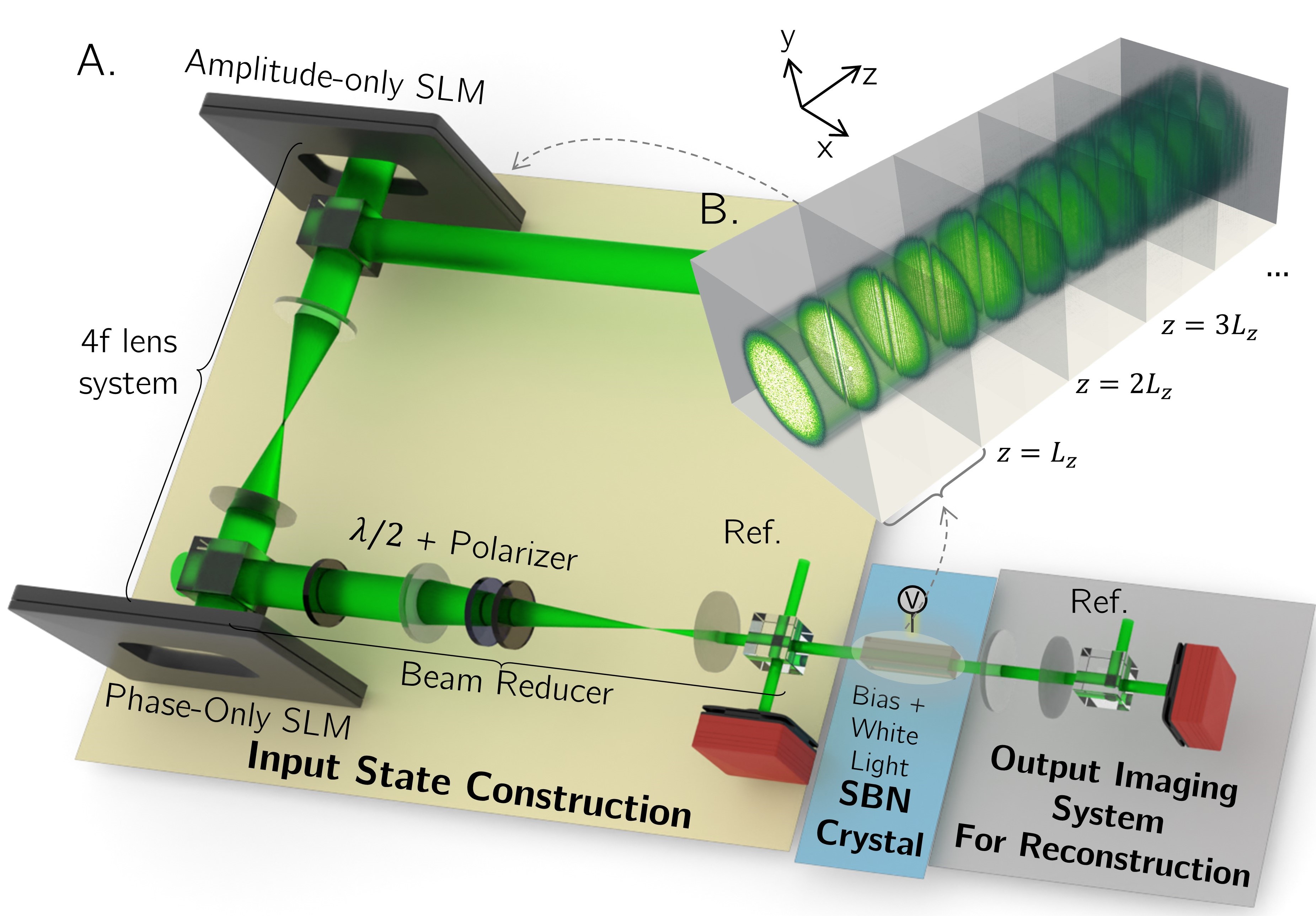
Paraxial Fluids of Light with Photorefractive Media

We study Paraxial Fluids of Light using photorefractive media to create versatile optical platforms for analogue quantum simulations. By shaping laser beams in these nonlinear materials, we explore quantum-like phenomena such as superfluidity, turbulence, and instabilities, opening new paths for simulating complex physics with light.
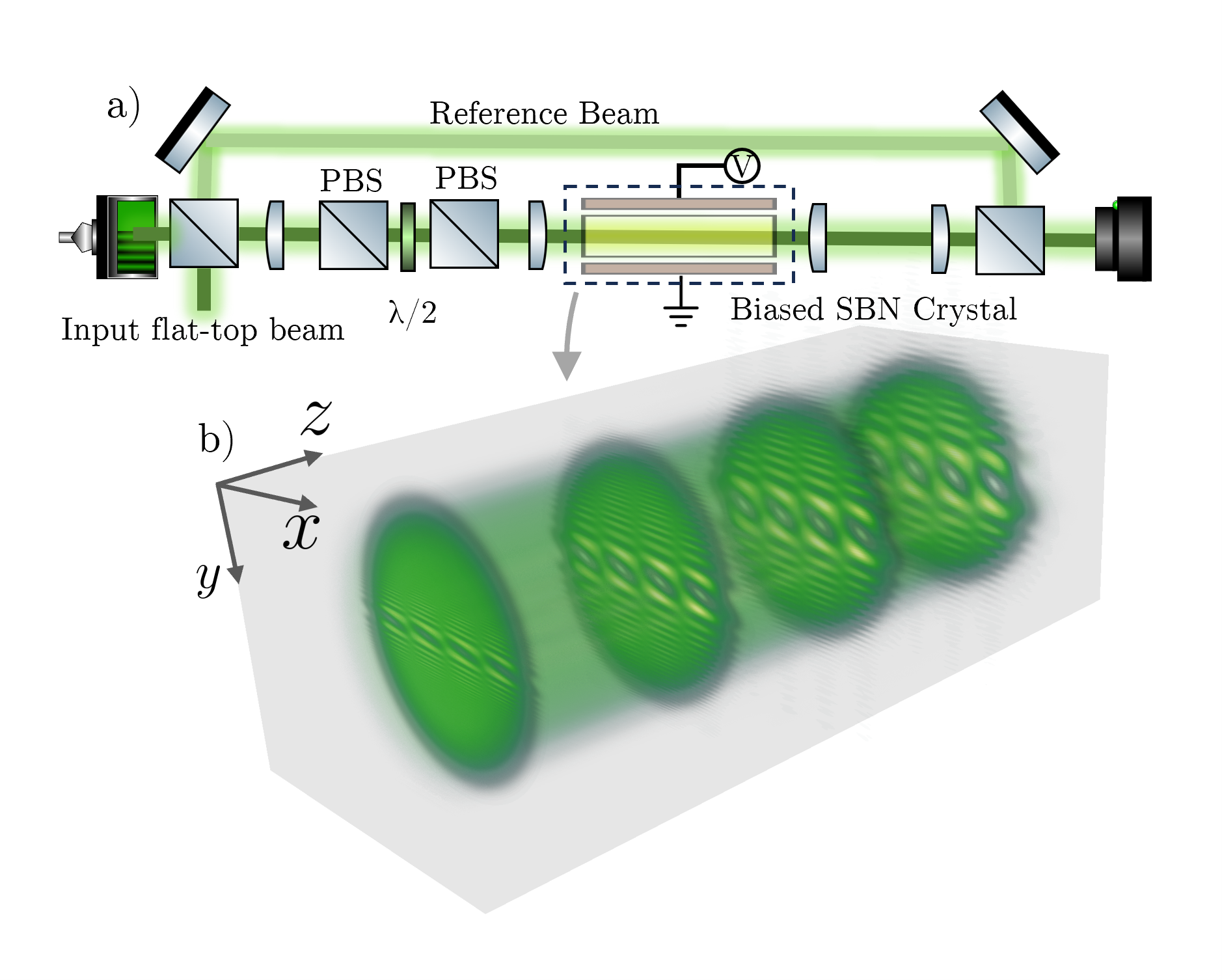
Fluids of Light with Photorefractive Media

Two-Dimensional Analogue Quantum Turbulence

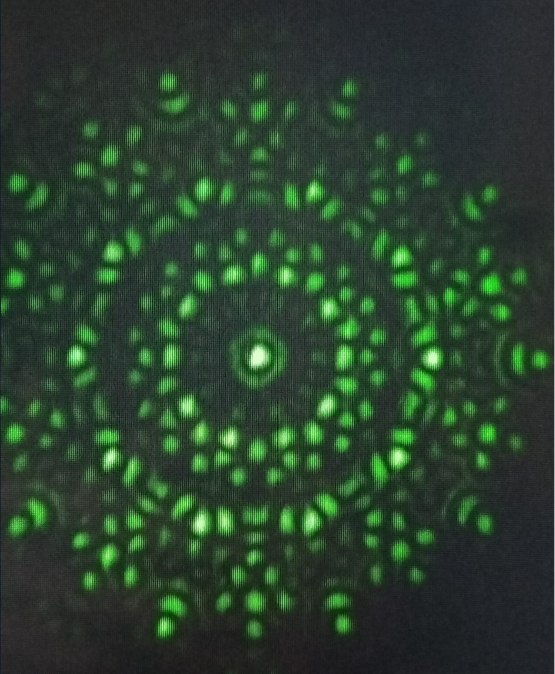
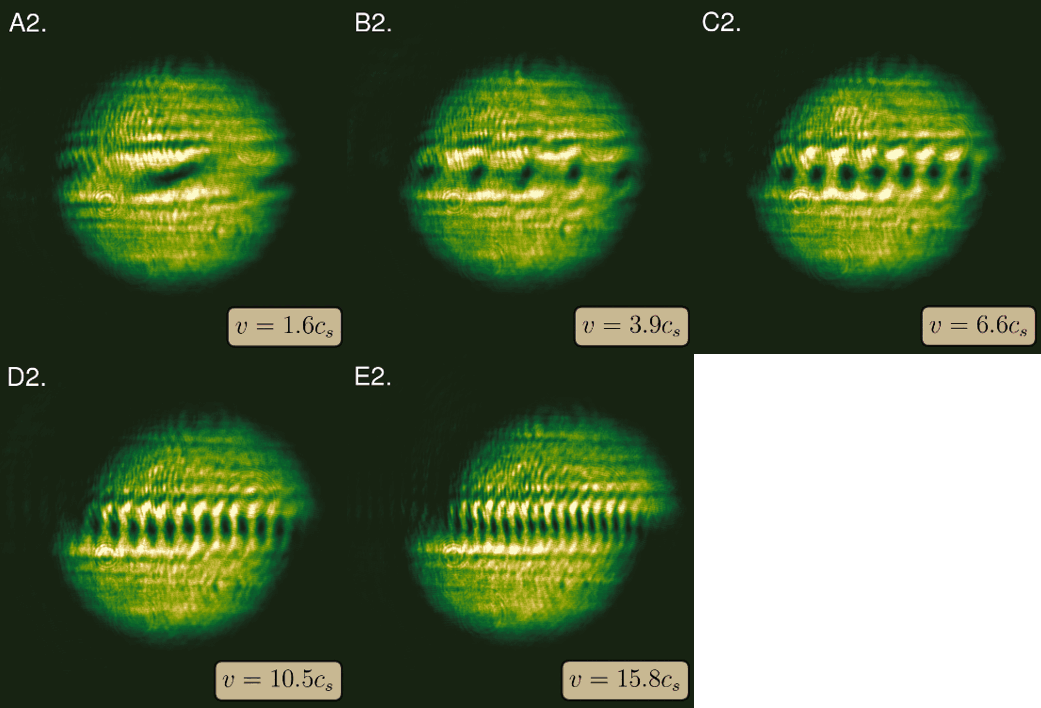
In this line of research, we investigate two-dimensional analogue quantum turbulence using paraxial fluids of light. By carefully controlling laser beams in nonlinear media, we recreate turbulent dynamics similar to those found in quantum fluids, allowing us to observe phenomena like vortex nucleation, energy cascades, and superfluid flow. This approach offers a unique, room-temperature platform to study complex turbulent behavior in a highly controllable and visual way, contributing to a deeper understanding of quantum turbulence and fluid dynamics.

Analogue Quantum Turbulence

Next Generation of Paraxial Fluids of Light

In this line of research, we are developing the next generation of paraxial fluids of light by implementing a digital feedback loop that allows us to overcome the physical length limitations of the nonlinear medium. By measuring the output light field and reinjecting it as a new input, we effectively extend the propagation time of the fluid, enabling us to explore longer and more complex dynamics. This technique opens new possibilities for analogue quantum simulations, allowing us to access intermediate states, study evolving phenomena in greater detail, and push the boundaries of what can be simulated with light.

Digital feedback loop

Topological Paraxial Fluids of Light

In this line of research, we explore topological phenomena in paraxial fluids of light by engineering optical configurations that mimic topological phases of matter. Using structured light fields and tailored nonlinear media, we aim to create and control topological excitations such as edge states and vortices with protected dynamics. This approach allows us to study the interplay between topology and nonlinear wave dynamics in a fully optical setting, opening paths toward robust light-based platforms for quantum simulation and information processing.

Analogue Gravity Models

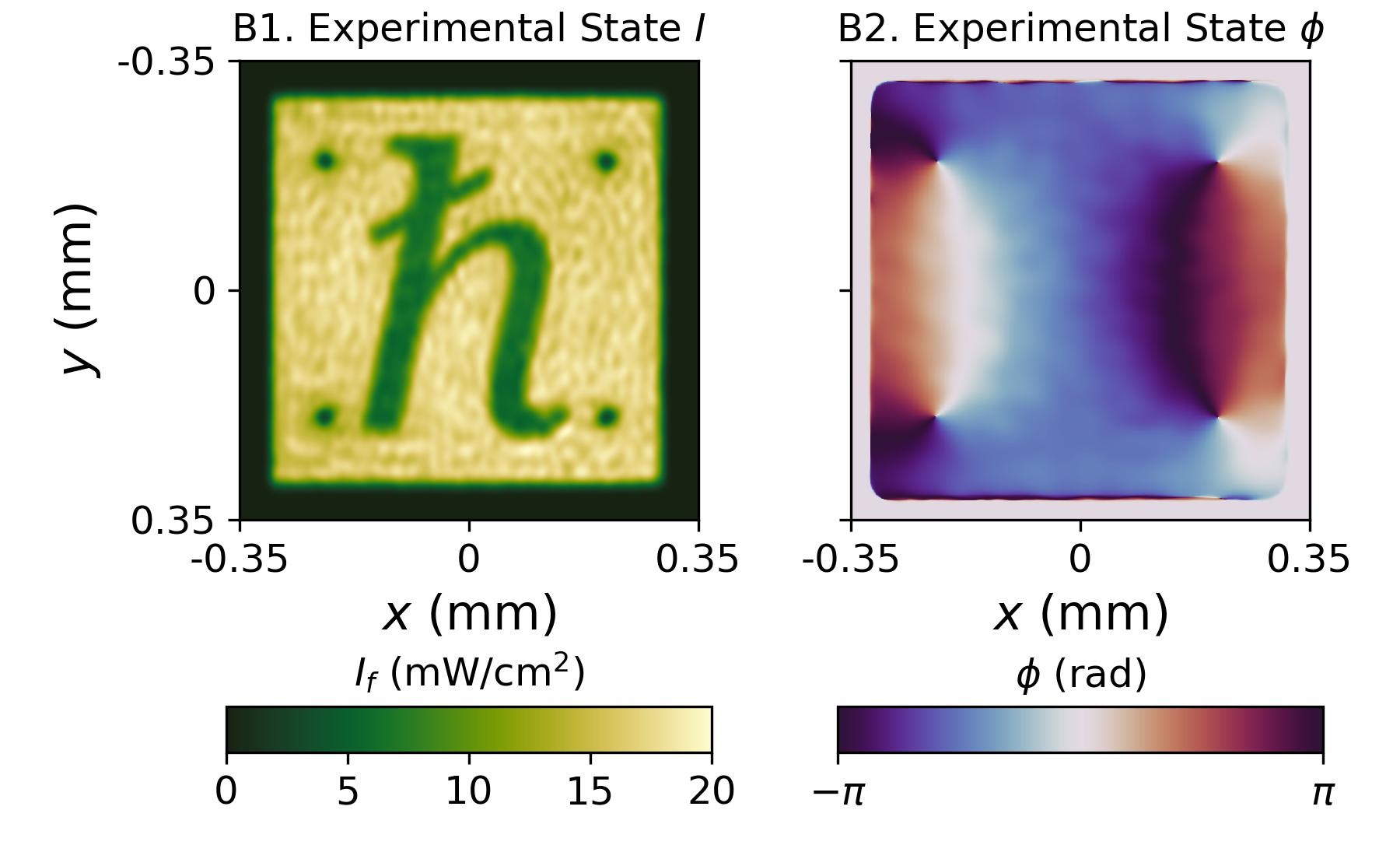
Advanced Wavefront Shaping

In our work on Advanced Wavefront Shaping, we develop techniques to precisely control the amplitude and phase of light beams using spatial light modulators and holography. This allows us to manipulate light in complex optical systems for applications such as optical trapping, beam shaping, imaging through scattering media, and enhancing optical computing platforms. By tailoring the wavefront, we unlock new levels of control over light-matter interaction in both linear and nonlinear regimes.

Advanced Wavefront Shaping

New Analogue Gravity Models

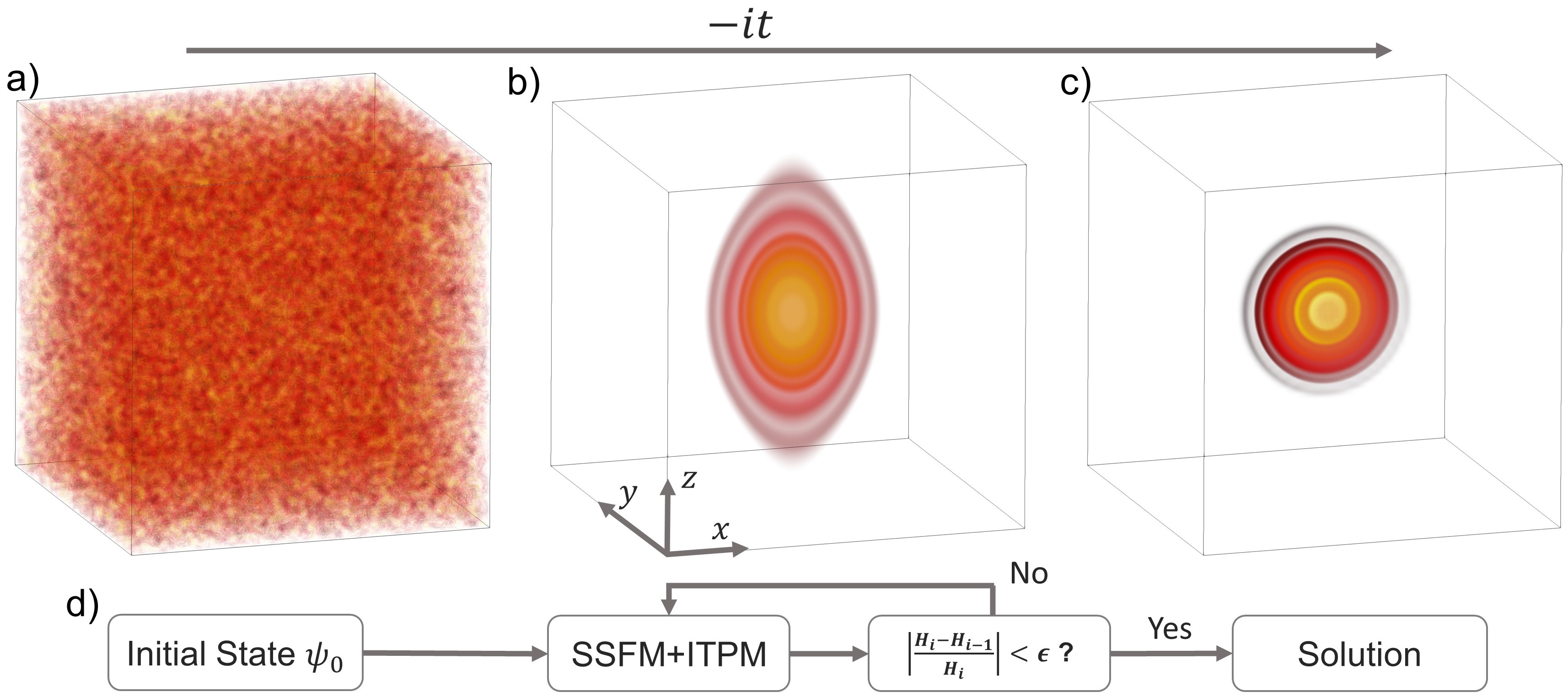
In this part of our research, we use high-performance numerical solvers to emulate new analogue gravity models based on paraxial fluids of light. By simulating the propagation of light in complex nonlinear media, we design and test configurations that mimic curved spacetime and gravitational effects. These simulations guide our experimental work, allowing us to explore novel geometries and dynamic scenarios—such as black hole analogues and cosmological flows—before implementing them in the lab. This approach expands the possibilities of analogue gravity by combining computational modeling with optical experimentation.

Analogue Gravity Models

Our Team

Meet the researchers working on Paraxial Fluids of Light projects:

Dr. Nuno A. Silva

Dr. Nuno A. Silva

Postdoctoral Researcher

Dr. Tiago Ferreira

Dr. Tiago Ferreira

Postdoctoral Researcher

Dr. Ariel Guerreiro

Dr. Ariel Guerreiro

Collaborator

Vicente Rocha

Mr. Vicente Rocha

PhD Student

Journal Articles

Digital Feedback Loop in Paraxial Fluids of Light: A Gate to New Phenomena in Analog Physical Simulations

Tiago .D Ferreira, A. Guerreiro, Nuno A. Silva

Physical Review Letters • 2024

Exploring the dynamics of the Kelvin-Helmholtz instability in paraxial fluids of light

Tiago .D Ferreira, Jakub Garwola, Nuno A. Silva

Physical Review A • 2024

Towards the experimental observation of turbulent regimes and the associated energy cascades with paraxial fluids of light

Tiago D Ferreira, Vicente Rocha, Duarte Silva, Ariel Guerreiro, Nuno A Silva

New Jornal of Physics • 2022

Pressureless static solutions in a Newton-Yukawa gravity model

Tiago D Ferreira, João Novo, Nuno A Silva, A Guerreiro, O Bertolami

Physical Review D • 2021

Hardware-neutral tools for the exploration of optical phenomena in near-resonant atomic systems

Nuno A. Silva, Tiago Ferreira, Ariel Guerreiro

International Journal of Modern Physics C • 2021

Exploring quantum-like turbulence with a two-component paraxial fluid of light

Nuno A. Silva, Tiago Ferreira, Ariel Guerreiro

Results in Optics • 2021

Dissipative solitons in an atomic medium assisted by an incoherent pumping field

Nuno A. Silva, A. L. Almeida, Tiago D. Ferreira, Ariel Guerreiro

Journal of Physics B: Atomic, Molecular and Optical Physics • 2020

Using numerical methods from nonlocal optics to simulate the dynamics of N-body systems in alternative theories of gravity

Tiago D. Ferreira, Nuno A. Silva, O. Bertolami, C. Gomes, A. Guerreiro

Physical Review E • 2020

Superfluidity of light in nematic liquid crystals

Tiago D. Ferreira, Nuno A. Silva, and A. Guerreiro

Physical Review A • 2018

PhD Theses

Topological Dynamics in Paraxial Fluids of Light

Vicente Rocha (In Progress)

University of Porto • Expected 2027

Advances in Paraxial Fluids of Light with Photorefractive Media

Tiago D. Ferreira

University of Porto • 2024

New trends in coherent optical media: models and high-performance simulation from steady-state and beyond

Nuno A. Silva

University of Porto • 2019

Master Theses

Superfluidity of Light: a Stepping Stone Towards Optical Analogues in Nematic Liquid Crystals

Tiago D. Ferreira

University of Porto • 2018

Solving the Time-Independent Generalised Nonlinear Schrödinger Equation using Deep Learning

Inês Madureira

University of Porto • 2018

Soliton Excitations in Open Systems using GPGPU Supercomputing

André Almeida

University of Porto • 2018

GASE: a high performance solver for the Generalized Nonlinear Schrödinger equation based on heterogeneous computing

Nuno A. Silva

University of Porto • 2013